Contents:
- Quick Answer: Wedding Florist vs DIY Full Cost
- Breaking Down the Full Wedding Florist Cost
- What Does a US Wedding Florist Charge in 2026?
- What You Don’t See in the Quote
- How Much Do DIY Wedding Flowers Really Cost?
- Actual Costs to Expect (2026)
- Cost Comparison: Florist vs DIY for a 120-Guest Wedding
- What Can Go Wrong (and Right) With DIY Wedding Flowers?
- Risks and Surprises
- When DIY Makes Sense
- When Hiring a Florist Is Worth Every Cent
- Ways to Save Without Full DIY (Hybrid Models)
- The Real-World Value of a Professional Florist
- Frequently Asked Questions
- How far in advance should I book a wedding florist in the US?
- Can I mix florist and DIY flowers for my wedding?
- What’s the cheapest way to do wedding flowers in 2026?
- Are wholesale flowers as fresh as florist-supplied blooms?
- What if I have allergies or want fragrant flowers?
- Take Action: Deciding What Works for You
Wedding Florist vs DIY: The Full Cost Analysis Every Couple Needs
Picture this: It’s two days before your wedding. Buckets of peonies and ranunculus crowd your kitchen. Your best friend is YouTubing boutonnière tutorials. You haven’t eaten since breakfast, but that arch isn’t going to flower itself. For many, the dreamy Pinterest-inspired wedding flower vision collides hard with the reality of time, skill, and money. So just how much does it really cost to go with a pro wedding florist versus the do-it-yourself flower route in 2026? The numbers might surprise you – and so might some hidden factors you hadn’t thought to budget for.
Quick Answer: Wedding Florist vs DIY Full Cost
- Average US wedding florist package (2026): $2,800-$6,500 (for bouquets, personals, centerpieces, arch, and some delivery/setup).
- DIY wedding flowers (2026): $600-$2,000 (raw flowers, supplies, tools–plus your time and labor).
- Surprise costs: DIYers often underestimate time and supply expenses; florists’ quotes include design expertise, labor, pro access to wholesale blooms, setup, and takedown.
| Florist (2026 Avg) | DIY (2026 Avg) | |
|---|---|---|
| Total Cost | $2,800-$6,500 | $600-$2,000 |
| Hours Saved | 25-35 | 30+ (your labor) |
| Professional Design | ✔️ | ❌ |
| Stress Level | Low-Med | High |
| Quality Guarantee | ✔️ | ❌ |
| Setup/Takedown | Included | You/volunteers |
“What most couples don’t realize is that by the time they buy all the vases, tools, buckets, floral foam, and the flowers themselves, they’re still paying about a third to half of a full-service florist’s price – for ten times the work.”
– Alexis Tran, AIFD Certified Event Florist, NYC
Breaking Down the Full Wedding Florist Cost
What Does a US Wedding Florist Charge in 2026?
According to the American Institute of Floral Designers, the average price for a full-service wedding florist in major US cities (New York, Los Angeles, Chicago, Atlanta, Dallas) falls between $2,800 and $6,500 in 2026. Why the wide range? Several factors:
- Guest Count: More tables mean more centerpieces.
- Floral Choices: Ranunculus, peonies, and orchids are pricier than stock or carnations.
- Design Complexity: Lush, modern garden-style arrangements require more blooms and skill.
- Labor and Logistics: Delivery, on-site setup, moving large installations, and late-night takedown all add up.
Typical Florist Package Includes:
- Bridal bouquet ($200-$400)
- Bridesmaid bouquets ($75-$150 each)
- Boutonnières and corsages ($15-$45 each)
- Ceremony arch or chuppah ($400-$1,500)
- Centerpieces ($80-$300 each)
- Delivery and setup ($150-$600)
- Strike/cleanup ($100-$300)
Florists purchase blooms at wholesale prices through local and international suppliers. In 2026, supply chain snarls and climate variability have kept wholesale flower costs higher than pre-pandemic years. Still, pros have standing relationships and bulk discounts with importers like Mayesh, Florabundance, and Kennicott, which means more stem variety and better freshness than most DIYers can access.
What You Don’t See in the Quote
- Design time: Custom color palettes, recipes, and mockups.
- Prep labor: Hydrating, cleaning, and conditioning thousands of stems in the days before the wedding.
- Insurance and licensing: Pros carry liability insurance, a must for venues.
- Equipment: Chilling rooms, delivery vans, lifts for arches.
“A couple might balk at a $4,000 flower quote,” says Jenny Caldwell, owner of Wildcraft Florals in Austin, “but that covers my team for three full days, every tool in our arsenal, and years of design training. It’s not just the flowers – it’s everything behind the scenes.”
How Much Do DIY Wedding Flowers Really Cost?
Actual Costs to Expect (2026)
DIY can be dramatically cheaper – $600 to $2,000 is typical for the average 120-guest wedding. But that number hides a lot of sweat equity.
What You’ll Need to Buy:
- Bulk Flowers: $400-$1,200 (from Sam’s Club, Costco, BloomsByTheBox, FlowerMoxie, or FiftyFlowers)
- Greenery/Filler: $50-$150
- Vases/Containers: $100-$400 unless you thrift or borrow
- Tools/Supplies: $75-$200 (floral tape, wire, snips, buckets, foam, ribbon)
- Refrigeration rental: $0-$200+ (flowers wilt fast without coolers)
- Delivery Gas/Rental Van: $0-$150
Don’t Forget the Hidden Costs
- Trial & error: You may need to order a test box or lose a batch to learning curves.
- Time: Expect 20-40 hours of labor (unpacking, prepping, arranging, day-of setup).
- Waste: 10-20% of DIY flowers typically get discarded due to damage or errors.
- Stress: Mistakes are on you; no backup designer.
“The physical toll is real. I’ve seen brides spend their entire rehearsal day wrangling hydrangeas, only to be too tired to enjoy the evening. Professional florists have muscle memory for processing hundreds of stems – and backup plans when weather or blooms don’t cooperate.”
– Deanna Wolff, former horticulture instructor, Denver Botanic Gardens
Cost Comparison: Florist vs DIY for a 120-Guest Wedding
| Floral Element | Florist Price (2026) | DIY Price (2026) |
|---|---|---|
| Bridal Bouquet | $250 | $60-$110 |
| 4 Bridesmaids | $400-$600 | $100-$200 |
| 6 Boutonnières | $90-$150 | $30-$45 |
| 2 Corsages | $40-$80 | $12-$25 |
| 10 Centerpieces | $1,000-$2,500 | $260-$600 |
| Ceremony Arch | $500-$1,200 | $200-$350 |
| Delivery/Setup | $200-$500 | $0-$150 (DIY labor) |
| TOTAL | $2,480-$5,280 | $662-$1,480 |
DIY can result in savings of $1,500-$4,000 but trades money for time and risk.
What Can Go Wrong (and Right) With DIY Wedding Flowers?
Risks and Surprises
- Timing: Flowers should be arranged 1-2 days before the event for maximum freshness. That means you, friends, or family are working last-minute.
- Flower Quality: Bulk suppliers like Costco and FiftyFlowers offer great options, but sometimes, boxes ship late or contain substitutions.
- No Refunds: If 30% of your white roses arrive brown, replacements may not be available in time.
- Post-Wedding Cleanup: After the party, someone needs to haul everything away – not always what the couple expects to do on day one of their marriage.
When DIY Makes Sense
- Small weddings (under 50 guests)
- Casual venues or backyard settings
- You have a design-savvy friend/team
- You genuinely enjoy the process, even under pressure
When Hiring a Florist Is Worth Every Cent
- Complicated installs (arches, hanging florals)
- Strict venues (many require insured florists)
- You want to focus on relaxing and celebrating
- Predictable, stress-free results
Ways to Save Without Full DIY (Hybrid Models)
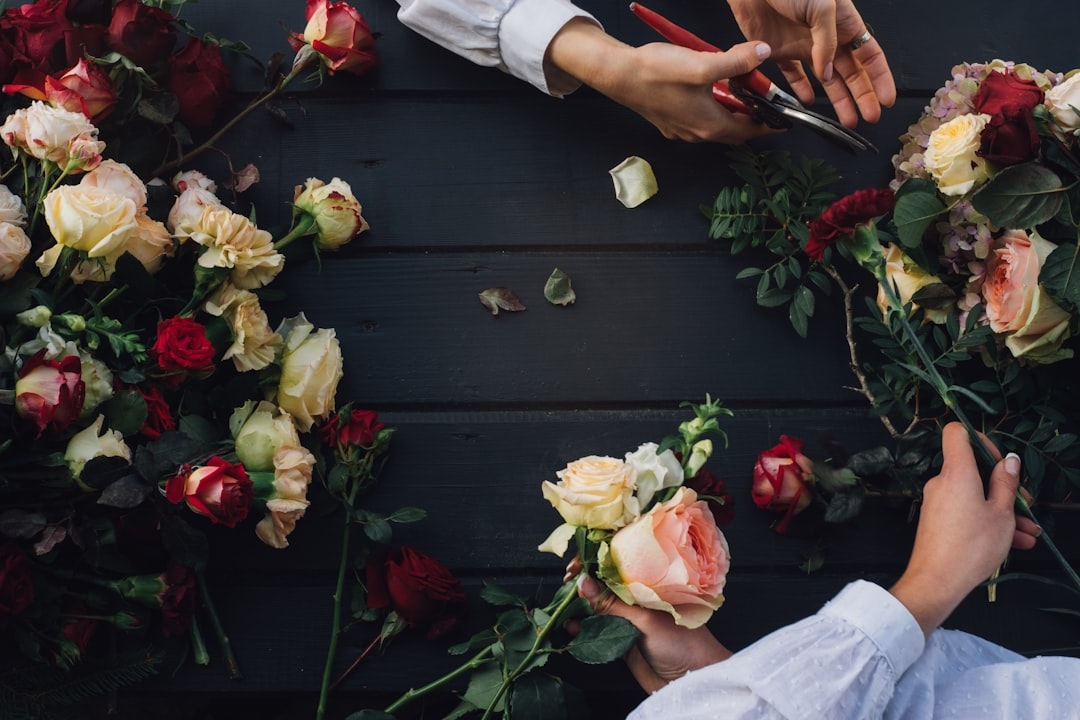
Not all or nothing. Many couples in 2026 are choosing a “hybrid” approach, such as:
- Hire a florist for the ceremony and personals; DIY the reception centerpieces with friends.
- Order DIY flower kits (e.g. FlowerMoxie’s kits or Sam’s Club bulk boxes) for simple arrangements; leave the complex pieces to a pro.
- Rent silk or dried floral installations (especially for arches and tables).
Some florists offer “a la carte” or “bucket” options: you buy buckets of prepped flowers by the stem for self-arranging, reducing cost but preserving quality.
The Real-World Value of a Professional Florist
It’s not just about the roses. Working with a professional brings added benefits beyond flowers alone.
- Design Expertise: Pros know what blooms will be in peak season, how to match your aesthetic, and what’s actually possible in your venue.
- Last-Minute Fixes: Wilting bouquet? Broken arch? An experienced florist will have backup stems and solutions.
- Vendor Relationships: Florists often coordinate with planners, caterers, and rental companies to avoid logistical snafus.
“Most florists have a ‘disaster kit’ for weddings – from glue dots to extra boutonnières to backup ribbon. It’s about peace of mind, not just petals.”
– Marcus Pacheco, Lead Designer at Petal Theory, Chicago
Frequently Asked Questions
How far in advance should I book a wedding florist in the US?
Most couples should book their wedding florist 8-12 months in advance, especially for peak months (May-October). Top designers in popular cities are often fully booked a year ahead.
Can I mix florist and DIY flowers for my wedding?
Yes, many couples do a hybrid approach – letting a professional handle high-impact pieces like bouquets and the ceremony arch, and DIYing simpler reception arrangements. Confirm with your florist and venue that this is allowed.
What’s the cheapest way to do wedding flowers in 2026?
The lowest-cost options are:
- DIY bulk flowers from wholesalers (e.g. Sam’s Club, FlowerMoxie, Costco),
- Using seasonal, in-bloom local flowers,
- Thrifting/reusing vases,
- Simplifying designs (like bud vases or greenery-only).
Are wholesale flowers as fresh as florist-supplied blooms?
Not always. Florists typically buy from premium or specialty growers and condition stems in professional coolers. DIY wholesalers ship direct to consumer, which can mean extra transit time and unpredictable quality – though reputable sources are improving logistics each year.
What if I have allergies or want fragrant flowers?
Tell your florist or bulk supplier in advance. Florists can source hypoallergenic blooms (like orchids or ranunculus) or maximize scent (garden roses, stock). DIYers should test flowers ahead of time, since some varieties (like lilies or eucalyptus) can trigger sensitivities.
Take Action: Deciding What Works for You
No single answer fits every wedding. The “florist vs DIY” debate is about trade-offs – your budget, your timeline, your stress tolerance, and your flower dreams. Crunch your actual numbers, then imagine your wedding week. Do you see yourself blissfully arranging stems, or soaking in precious moments with friends and family while a pro team works their magic? Booking early, asking the right questions, or mixing both approaches can save you money and sanity. In 2026, thoughtful planning – not just the biggest floral budget – delivers wedding flowers you’ll love (and remember for the right reasons).