Contents:
- The Cost of Flower Farming Tools: A Quick Breakdown
- What Tools Do You Need to Start Flower Farming?
- Basic Hand Tools
- Irrigation & Watering
- Bed Prep & Mulching
- Harvest & Post-Harvest Supplies
- Netting, Stakes, and Crop Support
- Comparing First-Year Flower Farming Tool Investments
- Ways to Save on Flower Farm Tools–Without Regretting It
- Buy Used, Borrow, or Barter
- DIY Where Possible
- Invest Where it Counts
- Flower Farming Tools First-Year Investment for Small vs. Large Startups
- Small-Scale Flower Market Gardens
- Larger Farms and Expanding
- Must-Have vs. Nice-to-Have Flower Farm Tools
- How Tool Choice Affects Flower Crop Quality and Profit
- First-Year Surprise Costs: What New Growers Overlook
- Frequently Asked Questions
- How much does it cost to start a flower farm in the US, including tools?
- What are the most crucial tools for new flower farmers?
- Can I use regular gardening tools for flower farming?
- How much should I budget for irrigation setup?
- Is a walk-in cooler necessary for a first-year flower farm?
- Set Your Farm–and Your Tools–Up for Success
Flower Farming Tools First-Year Investment: A Real-World Guide for New Growers
Picture your first morning on a new flower farm. Dew on the petals, hands deep in soil, visions of lush buckets of ranunculus and snapdragons filling your truck. The right tools can make or break that dream–transforming sweat equity into real bouquets, and dollars into sustainable profit. Yet, one of the biggest questions for first-time growers is: how much does it really cost to gear up for year one?
The Cost of Flower Farming Tools: A Quick Breakdown
For most first-year US flower farmers, expect to invest between $2,500 and $8,000 in essential tools and equipment. This range covers must-haves like hand tools, irrigation, tarps, harvest gear, and basic post-harvest supplies. Costs vary by region, farm size, and how much you can DIY. Renting or borrowing some items can reduce upfront costs. High-value investments–such as a reliable broadfork, quality snips, and a walk-in cooler–pay off quickly in efficiency and crop quality.
What Tools Do You Need to Start Flower Farming?
You don’t need to break the bank–or build a full-scale operation–from day one. Here’s a look at essentials every new cut-flower grower should consider in 2026:
Basic Hand Tools
- Broadfork (e.g., Johnny’s Selected Seeds, $250-$350): Essential for prepping beds without destroying soil structure.
- Hori Hori knife: For dividing plants, weeding, and transplanting ($40-$65).
- Bypass pruners (Felco 2, $65-$75): The gold standard for flower farmers–sharp, durable, and repairable.
- Harvest knives and snips: Multiple pairs keep things moving at harvest ($15-$40 each).
“I bought cheap tools my first year, and by July I’d replaced half of them. Quality matters–your hands and back will thank you.”
– Miriam Lee, owner of Sunlit Acres Flower Farm, Oregon
Irrigation & Watering
- Drip tape system kit (for 1/4 acre, $350-$600): Saves water and minimizes disease risk in densely planted beds.
- Timers, hoses, and filters: Budget another $200.
Bed Prep & Mulching
- Silage tarps (50’ x 100’, $180): Smother weeds and prep beds sustainably.
- Landscape fabric/weed barrier: $60-$120 per roll.
- Rake, shovel, wheelbarrow: $100-$300 total.
Harvest & Post-Harvest Supplies
- Buckets (food-grade 5-gallon): $5-$10 each. Budget 30-50 for a first season ($200-$400).
- Cooler: Ideally, a walk-in built from a CoolBot system ($1,500-$3,000 to DIY). A used fridge/freezer can work in a pinch.
Netting, Stakes, and Crop Support
- Flower support netting (4’ x 328’): About $90-$120 per roll.
- Rebar or T-posts: $5-$10 per post. Plan for 40+ for one-quarter acre.
Comparing First-Year Flower Farming Tool Investments
| Tool Category | Bare Minimum ($) | Mid-Range ($) | “Splurge”/Quality ($) |
|---|---|---|---|
| Hand Tools | $120 | $300 | $700 |
| Irrigation | $200 | $500 | $1,200 |
| Bed Prep/Mulching | $180 | $300 | $700 |
| Harvest/Post-Harvest | $100 | $400 | $3,000 |
| Netting/Supports | $150 | $400 | $600 |
| Total | $750 | $1,900 | $6,200 |
These are rough 2026 prices, assuming smart shopping and mostly manual (not mechanized) growing on a quarter acre or less.
Ways to Save on Flower Farm Tools–Without Regretting It
Not every tool needs to be shiny and new. Resourcefulness is a flower farmer’s best friend.
Buy Used, Borrow, or Barter
- Facebook Marketplace & Craigslist: Prime spots for finding everything from wheelbarrows to walk-in coolers at half price.
- Tool libraries & local garden clubs: Sometimes loan tools or have swap days.
- Partner with other farms: Share costly tools like broadforks or seeders during off days.
DIY Where Possible
- DIY flower support: Rebar and mason’s twine do the job for less than half the cost of commercial netting for certain crops.
- Economical harvest buckets: Restaurant supply stores or even local delis often have sturdy, food-grade buckets for free or $2 apiece.
Invest Where it Counts
A $75 pair of Felco pruners or a $300 broadfork seems steep, but they’ll outperform–and outlast–cheaper options. According to Harriet Chen, a cut-flower specialist at Rutgers University Extension, “Equipment that connects directly to speed and ergonomics translates to measurable profit over a season.”
Flower Farming Tools First-Year Investment for Small vs. Large Startups
Startup size is a huge factor. For a backyard grower (1/8 acre), you might spend closer to $1,500. For production-scale (1+ acre), $5,000-$10,000 is more typical, especially if buying a used walk-in cooler or mechanized seeder.
Small-Scale Flower Market Gardens
- Rely mostly on hand tools.
- Less infrastructure–maybe just a chest freezer modification for a cooler.
- Lean on friends and family for harvest help.
Larger Farms and Expanding
- Invest in time-saving equipment: Jang push seeders, harvest carts, multi-row irrigation.
- Consider a professional-grade walk-in cooler or even basic field tunnels/rain covers.
“The farm’s growth is always bottlenecked at the harvest and post-harvest stage. Keeping stems cool and workspace organized is what lets you scale up.”
– Katya Frey, owner of Sprout and Stem Flower Co., Michigan
Must-Have vs. Nice-to-Have Flower Farm Tools
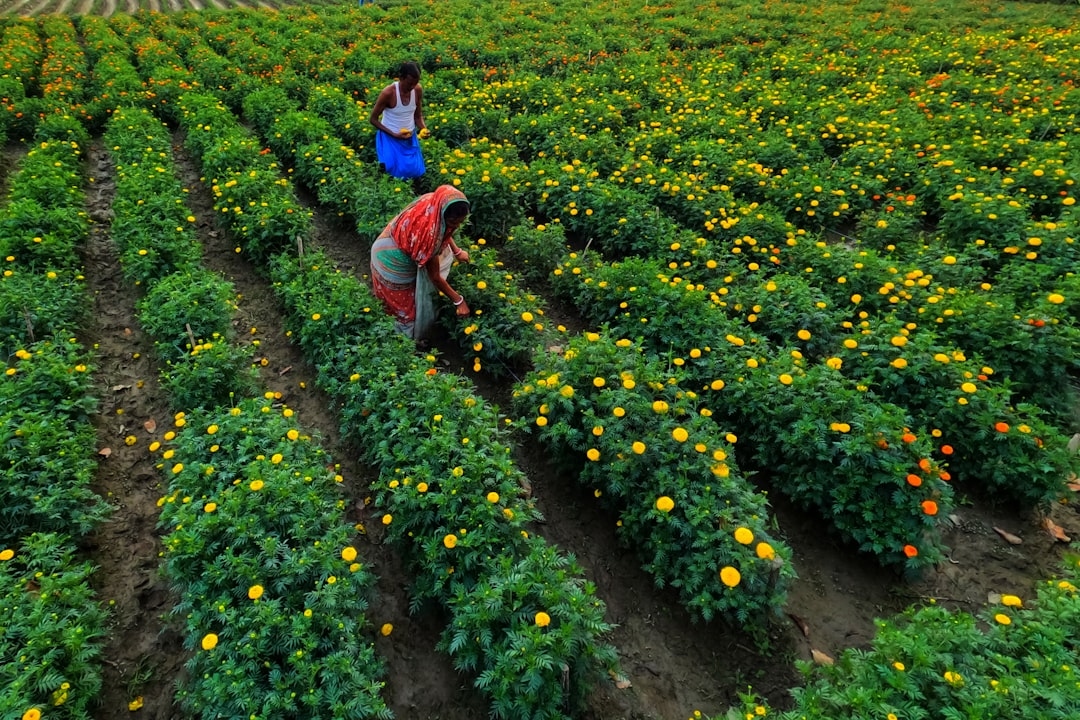
Here’s a quick-start list for a US-based beginner flower farm in 2026:
Must-Haves:
- Broadfork or garden fork
- Hori Hori knife
- Quality pruners
- Drip irrigation kit
- Silage tarp
- Harvest buckets
- Heavy-duty gloves
Nice-to-Haves:
- Walk-in cooler (can use a converted chest freezer short-term)
- Seed starting heat mats and grow lights ($80-$400)
- Row cover for frost protection
- Battery-powered hedge trimmer for mass pruning
How Tool Choice Affects Flower Crop Quality and Profit
Quality tools don’t just make the work easier–they also improve your product. Dull snips can crush stems, shortening vase life. Inconsistent irrigation equals stunted blooms. Slow harvest means flowers wilt before they hit the cooler. In a competitive market (US cut-flower sales topped $1.48 billion in 2025, per USDA), quality control is critical.
Kenya Brown, owner of June Blooms Farm in Georgia, sums it up:
“The faster I can cut and cool, the longer my flowers last for customers. That’s what brings repeat business.”
First-Year Surprise Costs: What New Growers Overlook
New flower farmers often forget:
- Tool maintenance: Sharpening, tune-ups, and replacements cost $100-$250 per year.
- Replacement for lost/damaged gear: Buckets, pruners, and tarps walk away or wear out quickly.
- Personal protective equipment: Knee pads, sun hats, rain gear–budget $250.
- Storage and organization: Shelving, bins, and a secure lockup, $200-$500.
A realistic first-year tool budget always has a $400 “buffer” for these curveballs.
Frequently Asked Questions
How much does it cost to start a flower farm in the US, including tools?
Most small-scale US flower farms spend $2,500 to $8,000 on first-year tools and basic equipment, depending on acreage and tool quality. This is separate from land, seeds, and infrastructure.
What are the most crucial tools for new flower farmers?
Key essentials: a high-quality broadfork, sharp pruners, harvest buckets, drip irrigation system, and weed/barrier fabric. A walk-in cooler is highly recommended for best flower quality but can be improvised in year one.
Can I use regular gardening tools for flower farming?
General gardening tools can work initially, but professional-grade snips, broadforks, and harvest gear last longer and improve efficiency for cut-flower operations.
How much should I budget for irrigation setup?
For a ¼-acre flower farm in the US, expect to invest $350-$600 in drip tape, timers, filters, and hoses for a reliable and water-efficient setup.
Is a walk-in cooler necessary for a first-year flower farm?
While a walk-in cooler isn’t strictly required, having a way to chill and store flowers (DIY using a CoolBot or chest freezer) can double vase life, reduce spoilage, and improve market value.
Set Your Farm–and Your Tools–Up for Success
Don’t be fooled by Instagram’s perfect petals: flower farming is gritty, physical, and sometimes muddy work. Smart investments in tools, even in year one, pay off with happier hands, healthier stems, and bigger bouquets. Make a list, budget realistically, and don’t be afraid to ask other local growers what worked for them. Every bucket of blooms starts with choosing the right shovel–and stubbornly sharp snips.
Before the ground dries out this spring, map out your essential tool list. Check auctions, join a tool library, find a farming mentor. Every cut flower that lasts longer on a customer’s table is a hidden dividend from the tools you choose today.